Sunday, 30 November 2014

Grey Art Gallery// Ernest Cole: Photographer

Photo by NYU News
As a young Asian female living in a first world country, I belong to a privileged strata of people who have led very comfortable and sheltered lives. Ernest Cole: Photographer left an indelible reminder of this fact. His black-and-white gelatin prints capture incredibly dark subject matter - the oppression of apartheid in South Africa in the 60's, which he personally lived under.

Unique from photographers who have worked with the same subjects, Ernest Cole's work does not depict high-tension, dramatic moments of the apartheid - he chose instead to photograph the everyday interactions that he witnessed in the streets. While not in-your-face, these pictures are still in every bit politically resonating, and manage to capture the brutality of his subject's experiences while simultaneously showing how they coped with their oppression day by day.

I did find myself wishing that the pictures had been blown up in scale (perhaps at least 4-5 times their actual size) such that viewers could get a stronger understanding of the subject at hand, but I feel that the set up was decidedly small to correspond with Cole's theme of focusing on the little things that matter.

Thursday, 20 November 2014

Mary Boone Gallery: Skyfarm Fortress by Jacob Hashimoto


Skyfarm Fortress is a collage of kites forming a "sky" by Jacob Hashimoto. It was mesmerizing when I visited. The entire room was filled with hundreds of suspended kites of varying colors, sizes and shapes, all meticulously arranged to create a beautiful composition. Combined with the simulated sound of rain dropping on the roof, the viewer is immersed in tranquility and awe the moment they step in.

To the uninitiated, it was not unlike stepping into a life-sized lego set with each 2-D kite carefully affixed to form a 3-D sculpture. I loved that he used kites, taking an aspect of his own culture and making something that is sophisticatedly, and most importantly, universally beautiful. The use of kites also delivered a sense of carefree weightlessness - I'm sure the room wouldn't have felt quite as tranquil if the kites were made of something solid such as the lego bricks I previously mentioned.

On a related note - just a few nights ago, a close friend and I were eating at Ippudo Ramen restaurant on 51st street between 8th and 9th avenue. While the service and food were excellent and akin to what we have had in Japan itself, I was a little thrown off by how the staff would bow and bellow greetings in Japanese to their customers. I felt that it robbed Ippudo of its authenticity as a Japanese restaurant, counteracting the very reason the staff were taught the greetings in the first place. While I understand that it is a different context and entirely different industry, I feel that sometimes in foreign countries outside of Asia, the Asian (or any foreign culture really) culture is often depicted in a way that is highly exaggerated or played up to appeal to their audiences. It is often the result of an archaic Orientalism that lacks a modern, educated understanding of what that culture actually represents and perpetrators are often even people from that culture itself!

In a very long-winded way, I mean to say that Hashimoto seems to have risen above all that, and through this exhibition I felt that he was able to deliver the sentiments of his culture successfully on a universal level without hyperbolizing or sensationalizing any aspect of it. I loved this showcase and would definitely recommend it to anyone.

Natural Museum of the American Indian // Glittering World: Navajo Jewelry of the Yazzie Family


Prior to my visit, I decided to do a little research on the Glittering World to gain some contextual understanding of the exhibition. 
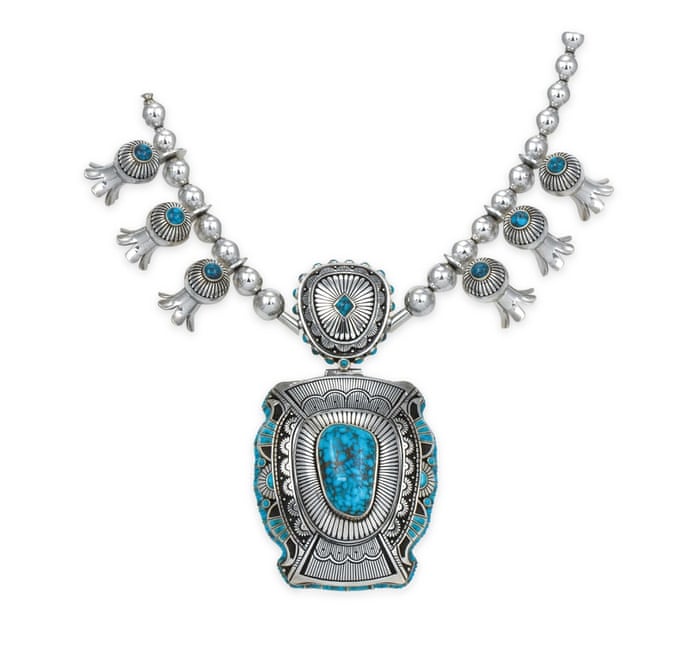
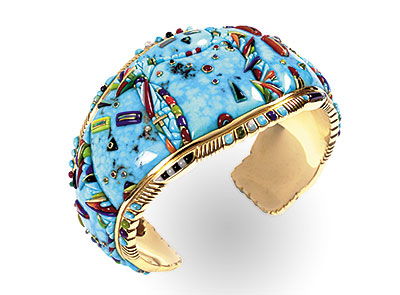
As it appears, the collection of Navajo jewelry was made entirely by the 12-sibling Yazzie family, a collective of master jewelers from Gallup, New Mexico. They are one of the most celebrated jewelry making families of their time, and do not typically produce more than 10 pieces a year - signifying the immense intricacy that is invested into each piece of jewelry. Each pendant, necklace, bracelet, ring or buckle has been inset with hundreds and hundreds of precious stones using their unique combination of original and traditional silversmith techniques. Material beauty aside, the accessories also carry great symbolic meaning, creating positive power and bringing blessedness to their wearers.

Featuring almost 300 examples of contemporary jewelry made by several members of the Yazzie family, Glittering World shows how the Yazzie family’s art carries on from their Southwest cultural root and the strong connection to their Navajo traditions. Moreover, I was able to gain a greater understanding on Navajo jewelry and its construction, its development as a form of cultural expression and the meaning behind the strong, spiritual symbolism.

As a fashion student, it was a great being able to get to the root of one of Fashion's greatest trends - The industry itself and street style enthusiasts alike have been appropriating American Indian designs for years, but nothing beats being able to see  up close and in greater personal detail. 

Tuesday, 18 November 2014

Museum of Modern Art: Henri Matisse: The Cut Outs


It was truly a shame that I was unable to take pictures at this exhibition, as it would've been great to be able to keep a personalized memory of this visit.

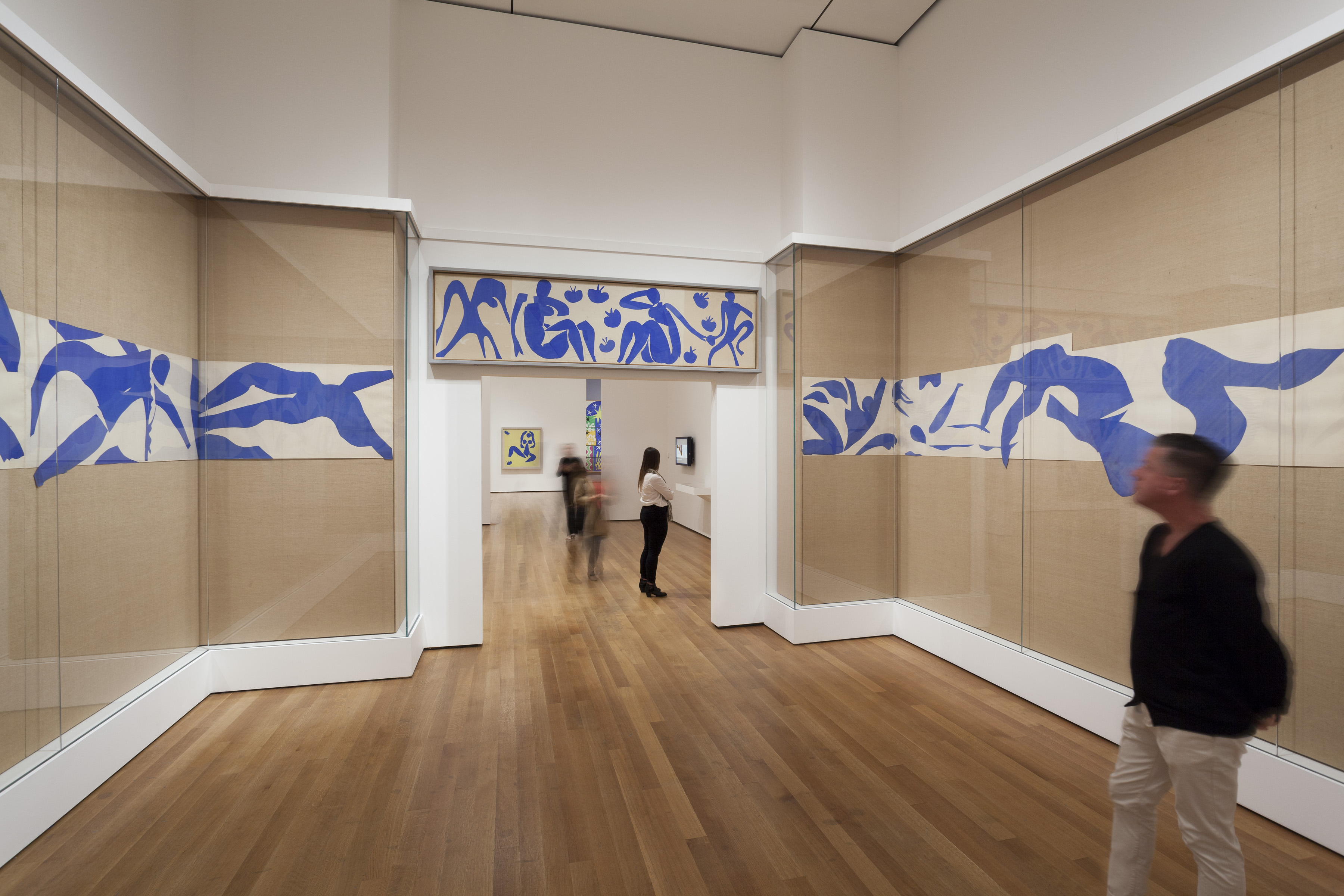
In this exhibition, MoMa has put on display the largest and most in-depth presentation of Henri Matisse's cut-out works, an insight into his final years as a legendary artist. In the late 1940's he worked almost exclusively with painted paper and scissors as his primary medium. He would cut abstract forms into the pieces of paper before arranging them into visually arresting compositions, playing with line, color, contrast and texture. Here, we were treated to his drawings, prints, illustrated books, stained glass and textiles.

(Picture from New York Times)

It was delightful being able to see the progression of his art. As a viewer, I could see him growing more confident, dramatic, ambitious and experimental with his designs as he continued to explore this newfound medium. They started out small and modest in size, but as he went on, they expanded in terms of scale, size and design, evolving eventually into room-sized works. It was also fun to see him breathe life into his environment, taking practical, everyday objects that we constantly overlook and illuminating them with his touch.


I felt that the exhibition was fitting for MoMa, given their ideal aesthetic and mission statement: To explore ideals and interests generated in the new artistic traditions that began in the late nineteenth century and continue today. Matisse was able to introduce and popularize the Cut-out as a radically new medium. His scale and technique also seemed to fit perfectly into the museum's interior layout, and I enjoyed walking through the space immensely. Karl Buchberg, the museum's senior conservator did an excellent job of arranging the pieces to fit concisely with the layout and still maintain an engaging composition. Even with Matisse's site-specific cutout, "The Swimming Pool",


Matisse had created the piece to put on display in his kitchen in Nice (Which MoMa now owns) in 1952. It is laid out to be a horizontal, wrap-around mural, and MoMa had worked around that problem and translated it to a museum context seamlessly.

Fashion Institute of Technology: Dance and Fashion


Set in a mise-en-scène full of dramatic flair by architect Kim Ackert, this exhibition opens with an enthralling display of ballet costumes and similarly dance-related fashion pieces from the 1830's to modern times.

Designers such as Stella McCartney, Yves Saint Laurent, Cristobal Balenciaga Rick Owens, Iris Van Herpen and Oscar de la Renta were amongst those featured here and it was terribly exciting to see their masterpieces live. 

The exhibition aims to explore the relation between dance and fashion and their influence as art forms on one another. It primarily features designs created for the New York City ballet, but also includes modern dance costumes worn by famed dancers. 

Ballet dress by Iris Van Herpen - she is part of a new wave of upcoming designers, and has been hailed as the next Alexander Mcqueen due to her innovative use of 3D structures and futuristic, surrealistic textures.

This piece stood out to be because it had been part of an event that drew tantamount attention from the public. 


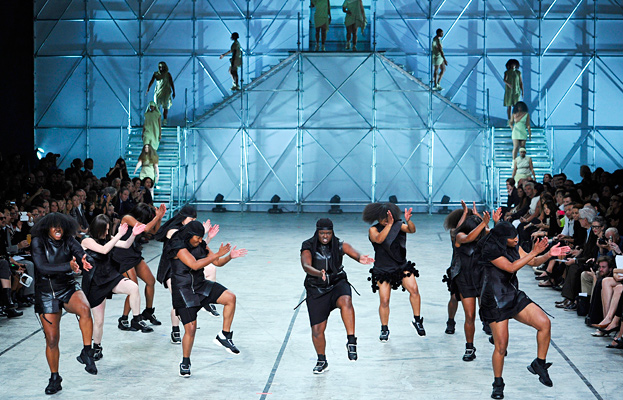
Rick Owens, an American fashion designer hailing from California had created his Spring/Summer 2014 collection and drawn inspiration from "stepping", a form of dance that evolved in African-American colleges. It is effectively a fusion of step dancing and cheerleading with military precision. For the runway showcase, Owens chose to debut his Summer/Spring 2014 collection with the dancers from four different sorority hip-hop groups to perform a bombastic, provocative and vicious dance during the introduction.


This radical move came amidst a period of great social-political unrest in the Fashion industry –as we are normally accustomed to 6-foot-tall, lithe Caucasian models. Naomi Campbell was also struck by this sentiment, as she had just written to the British Fashion Council to lament about the great lack of black models on British runways. In addition to that, Kanye West had just debated the limited futures that black people had in the fashion industry. As a result Owens' vicious model-army and their full-throttle performance swept their audience and the rest of the fashion world away, making a massive statement about the cutthroat, discriminative and overly-commercialized nature of fashion week. 

It was amazing to be able to see up close and personal - a piece that had played such an vital part in changing fashion history.